
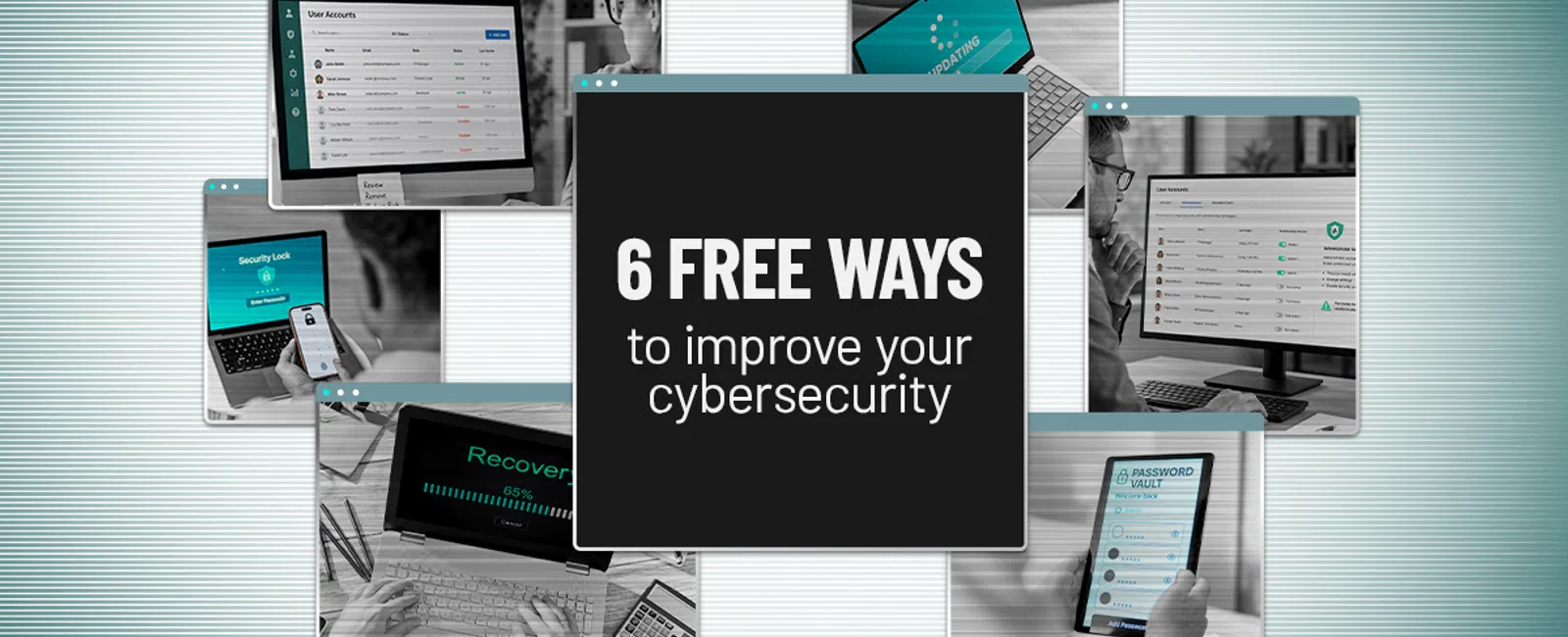
Cybersecurity is usually framed as a software issue, but the reality is broader. For most organizations, the greatest exposure comes from overlooked basics, slow follow-through, and security habits that aren't applied consistently.
This week, focus on six practical upgrades that can quickly lower your cyber risk.
1. Enable multi-factor authentication
If you haven't turned on multi-factor authentication (MFA), make it your first move. MFA adds an extra identity check before someone can access an account or resource. That second step might be a code from an authentication app or SMS, a security key, or a biometric scan such as a fingerprint or face ID.
Even if a password is stolen or guessed, MFA makes it much harder for an attacker to break in because they still need to pass the additional verification step.
Start by enabling MFA for:
- Microsoft 365 or Google Workspace
- Banking and payroll tools
- Cloud storage
- VPN access
- Mission-critical business applications
Many providers include MFA at no additional cost. Turning it on removes one of the most common ways attackers get in.
2. Eliminate unused accounts
Accounts tied to former employees, short-term contractors, and outside vendors can stay active long after they stop serving a purpose. Those forgotten accounts are easy to miss and can give attackers an open door into your environment.
Review your user list and ask:
- Does this person still work with us?
- Does this account still support a real business need?
- Does the account have more access than it should?
If any answer is no, remove the account or reduce its permissions right away.
3. Limit administrator privileges
Administrator accounts carry extensive control over your systems. They can install software, change settings, and disable protections, which makes them especially attractive to cybercriminals.
Take a closer look at access across your organization and ask:
- Does this user truly need admin rights to do the job?
- Is there a lower access level that fits their role better?
- Should this account still have elevated permissions?
Remove admin access wherever it isn't essential. Least-privilege access helps reduce damage if an account is ever compromised.
4. Turn on automatic updates
Attackers actively scan for software with known vulnerabilities. Updates are one of the fastest ways to close those gaps.
Make sure automatic updates are enabled for:
- Windows and macOS
- Phones and tablets
- Web browsers
- Microsoft Office
- Antivirus software
- Core business applications
Staying current helps patch weaknesses before they become entry points.
5. Adopt a password manager
Strong passwords are important, but asking people to remember unique credentials for every account is unrealistic. That's where a password manager can help.
A password manager makes it easier to:
- Generate strong passwords
- Store credentials securely
- Avoid password reuse
- Share logins safely when necessary
When employees have fewer passwords to remember, they're less likely to recycle weak ones across multiple accounts.
6. Test your backups
Backups only matter if you can restore them when disaster strikes. That means checking more than whether the backup ran; it means confirming recovery actually works.
Review your backup process and ask:
- When did the last successful backup complete?
- Has anyone tested a restore recently?
- How long would it take to recover?
A backup is only valuable when it can bring your business back online.
Simple improvements can deliver real protection
Cybersecurity doesn't have to begin with a major budget or a complex project. It starts by closing the basic gaps that create avoidable risk.
These six actions can reduce common threats without adding extra cost.
What matters most is putting them in place and maintaining them over time. We can help you build a clear action plan tailored to your team, your systems, and your risk profile.
Click here or give us a call at 1-310-798-0405 to schedule your free 15-Minute Discovery Call to see where you're exposed and what practical steps to take next.


