
April Fools Day comes and goes, along with the harmless pranks and bogus news that make you question everything on April 1st.
But cybercriminals don't take a break.
Spring marks a surge in cyber attacks—not because staff are negligent, but because everyone's busy and distracted, rushing through their day.
It's during these hectic moments that clever scams slip past defenses, appearing normal until it's too late.
Here are three active scams targeting sharp, well-intentioned employees simply trying to get their work done.
As you read, ask yourself: Would my team take a moment to spot these threats?
Scam #1: Fake Toll or Parking Fee Texts
An employee receives a text alert:
"You have an outstanding toll balance of $6.99. Pay within 12 hours to avoid penalties."
The message names an authentic toll system like E-ZPass or SunPass matching the area. The small fee seems harmless enough to click and pay quickly between meetings.
However, the link leads to a fraudulent site.
In 2024, the FBI documented over 60,000 complaints about these fake toll texts, and reports skyrocketed 900% in 2025. More than 60,000 counterfeit websites imitate state toll sites, showing just how lucrative this scam is. Some texts even target people in states without tolls.
The scam's success lies in the low amount and the familiarity of recent toll or parking experiences, making the claim feel legitimate.
Your defense: Genuine toll authorities don't demand immediate payment via text. Your employees should never follow payment links from texts and always verify charges through official sites or apps. They should avoid replying to such texts, as any response confirms their number is active and invites more scams.
Simplicity tricks users; strict process safeguards them.
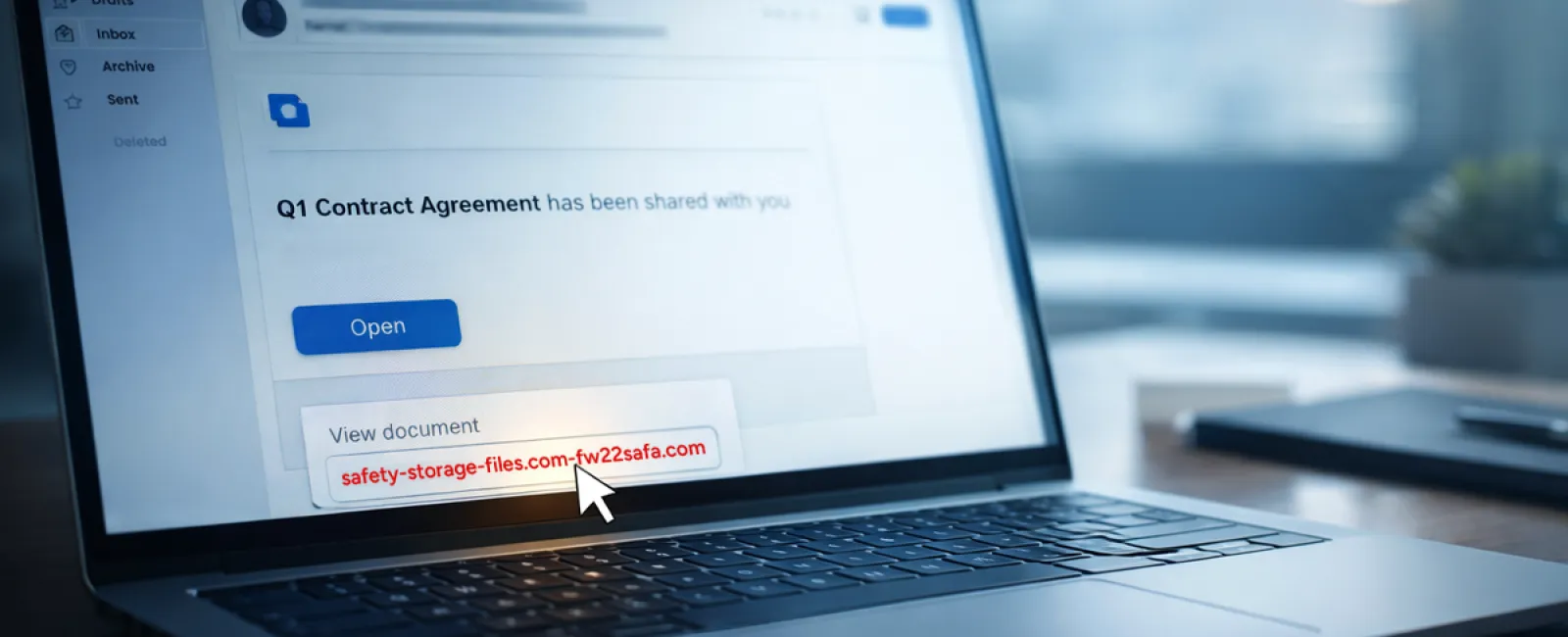
Scam #2: "Your File Is Ready" Email Phishing
This scam seamlessly fits into routine work.
An employee gets an email saying a file has been shared—commonly a DocuSign contract, OneDrive spreadsheet, or Google Drive document.
The sender's name and format seem perfectly legitimate—just like any other file-sharing notification.
Clicking prompts a login with work credentials—giving hackers access to your company's cloud environment.
Phishing using trusted platforms like Google Drive, DocuSign, Microsoft, and Salesforce grew by 67% in 2025, according to KnowBe4's Threat Labs. Google Slides phishing links rose over 200% recently.
Employees are seven times more likely to click malicious links from trusted platforms than random emails.
Some attackers even use compromised accounts to share files legitimately, sending notifications from genuine Google or Microsoft servers—bypassing spam filters.
Your defense: Train employees not to click unexpected shared file links. Instead, they should log in directly to the platform to verify files. Tighten external sharing permissions and enable alerts for unusual logins—settings your IT team can activate quickly.
Routine caution yields powerful protection.
Scam #3: Sophisticated, Well-Written Phishing Emails
Gone are the days when phishing emails had glaring grammar errors and odd formatting.
2025 studies reveal AI-crafted phishing emails have a 54% click rate—over four times higher than human-written scams.
These emails use real company names, job titles, and workflows gathered instantly from online sources, looking like genuine internal messages.
Targeted scams send fake verification requests to HR or payroll, vendor payment redirects to finance, and more. In tests, 72% interacted with vendor impersonation emails—90% higher than other phishing types. These messages are calm, professional, and urgent without alarm bells.
Your defense: Verify all sensitive requests—credential changes, payments, or data—through a second method like a call, chat, or in-person. Encourage employees to hover over sender addresses to confirm legitimate domains. Treat any urgency in emails as a warning signal.
True security relies on vigilance, not panic.
The Core Issue
These scams exploit familiarity, authority, timing, and the belief that "this will only take a moment."
The real vulnerability isn't careless staff—it's systems expecting perfect judgment under pressure.
If one hasty click can jeopardize operations, it's not a people issue—it's a flawed process.
Thankfully, processes can be strengthened.
How We Can Support You
Business owners often don't want to add another task or lead security training.
They just want confidence that their company is safeguarded.
If you're concerned about threats facing your team—or know another owner who should be—let's connect.
Book a simple discovery call where we'll discuss:
- Current risks impacting businesses like yours
- How everyday work creates hidden vulnerabilities
- Practical solutions to reduce risk without slowing productivity
No pressure. No fear tactics. Just clear insight and options to protect your business.
Click here or give us a call at 1-310-798-0405 to schedule your free 15-Minute Discovery Call.
If this message isn't for you, please forward it to someone who'd value this alert. Sometimes, recognizing a scam turns a risky click into a safe stop.


